Crowns & Bridges · Chiang Mai

Rebuilt to fit your bite, not just your tooth

A crown protects a tooth that has lost too much structure to be filled. A bridge closes a gap where a tooth has already gone. Both are digitally scanned, shade matched to the teeth beside them, and quoted in writing before anything begins.

Crown or bridge from฿17,000 / tooth
MaterialsAll-ceramic · metal-free
Finished in3–5 days
ImpressionsDigital scan
CostsFixed in writing first
When a crown is the right answer

A filling replaces tooth. A crown holds it together.

The difference matters. A filling sits inside the tooth and relies on the walls around it. Once those walls are thin or already cracked, adding more filling material makes the tooth bigger, not stronger.

A large silver (amalgam) filling

Amalgam was the standard for decades, but it does not bond to the tooth and is harder than the tooth around it. A large one leaves thin walls that crack over the years, which is why replacing it and crowning the tooth is one of the most common cases we see.
A cracked or broken cusp

A piece of the biting surface has fractured away, or the tooth flexes and hurts when you bite on something hard.

After root canal treatment

A root-treated back tooth has lost structure from the inside and is more likely to split under chewing force.

A gap between teeth

A tooth already missing, with sound teeth either side of the space that can carry a bridge across it.

Not every damaged tooth needs a full crown. Where enough sound structure remains, an inlay or onlay covers only the part that has failed and keeps more of your own tooth. If that is the better option for you, we will say so.

After root canal treatment

The tooth is quiet again. It still needs protecting.

Root canal treatment cleans and seals the inside of the tooth. It deals with the infection and usually settles the pain, but it does not rebuild the tooth around it. Between the original damage, the access opening and the shaping of the canals, there is less solid tooth left than there looks to be from outside. That is why a full-coverage restoration is commonly recommended afterwards, particularly on the back teeth that do the heavy chewing.

A temporary filling is meant to seal the tooth for a short period between appointments, not to be chewed on for months. An unprotected root-treated tooth can crack, and a cracked root-treated tooth often cannot be repaired.

Before anything is prepared, we check the tooth is ready

X-ray review of the root canal

How the canals were filled, whether the filling reaches the end of the root, and whether the bone around the root tip looks settled or still inflamed.

Symptoms and tenderness

Whether the tooth is still sore to bite on, tender to pressure, or has any swelling near the gum. Signs the root treatment may not have settled.

How much tooth remains

How many walls are still standing and how much sound structure sits above the gum. This decides whether a crown has enough to hold on to.

Cracks and decay

Old filling material is checked for decay underneath, and the tooth is examined for cracks. A crack running into the root changes the plan entirely.

Your bite

How the tooth meets the opposing teeth, and whether you clench or grind. Heavy bite forces influence both the material and how the crown is shaped.

Build-up, or post and core

If too little tooth remains, a core build-up, and in some cases a post inside the canal, is needed first to give the crown something solid to sit on.

Not every tooth is ready for a crown on the day you walk in. Sometimes the root canal needs re-treatment first, sometimes decay or gum inflammation has to be dealt with, and occasionally the honest answer is that the tooth cannot be predictably saved. If that is the case we will tell you and go through the alternatives, rather than crown over a problem and let you find out later.

One gap, three answers

Bridge or implant? It depends on the neighbours.

For a tooth that is already missing, the real question is what happens to the teeth on either side of the space.

 CrownBridgeImplant
What it is for A damaged tooth still in the mouth. A missing tooth, with teeth either side of the gap. A missing tooth, replaced at the root.
Neighbouring teeth Untouched. Both are prepared to carry the bridge. Untouched.
Surgery None. None. Yes, under local anesthetic.
Time Two visits over 3–5 days. Two visits over 3–5 days. Months, while the implant integrates.
Often chosen when The tooth is cracked, heavily filled or root-treated. The teeth beside the gap are already crowned or heavily filled. The teeth beside the gap are healthy and untouched.
Cleaning As normal. Needs threading under the false tooth daily. As normal, plus regular checks.
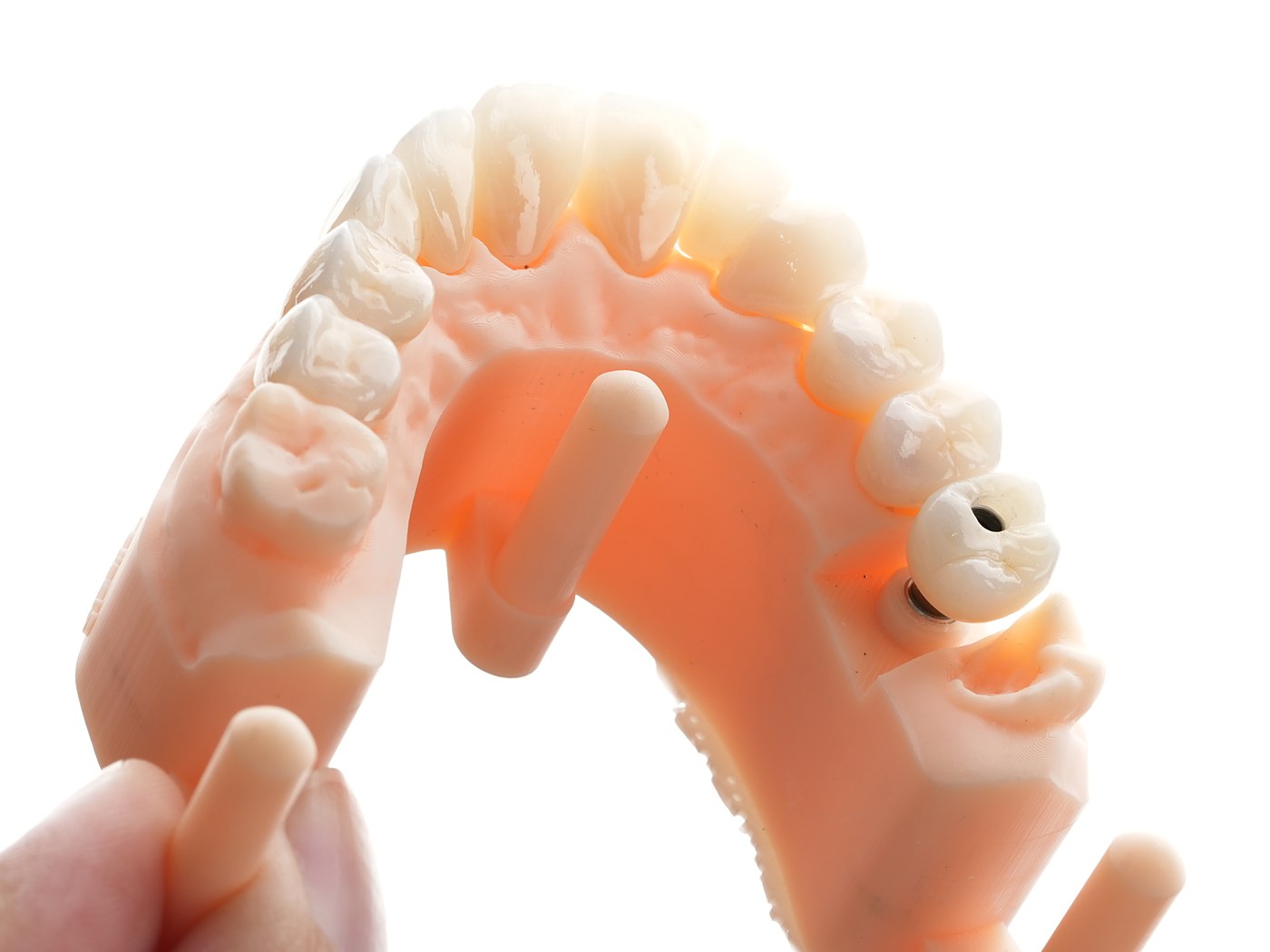
All-ceramic zirconia crowns on the working model before fitting
Zirconia crowns on the working model, checked before they go anywhere near the mouth
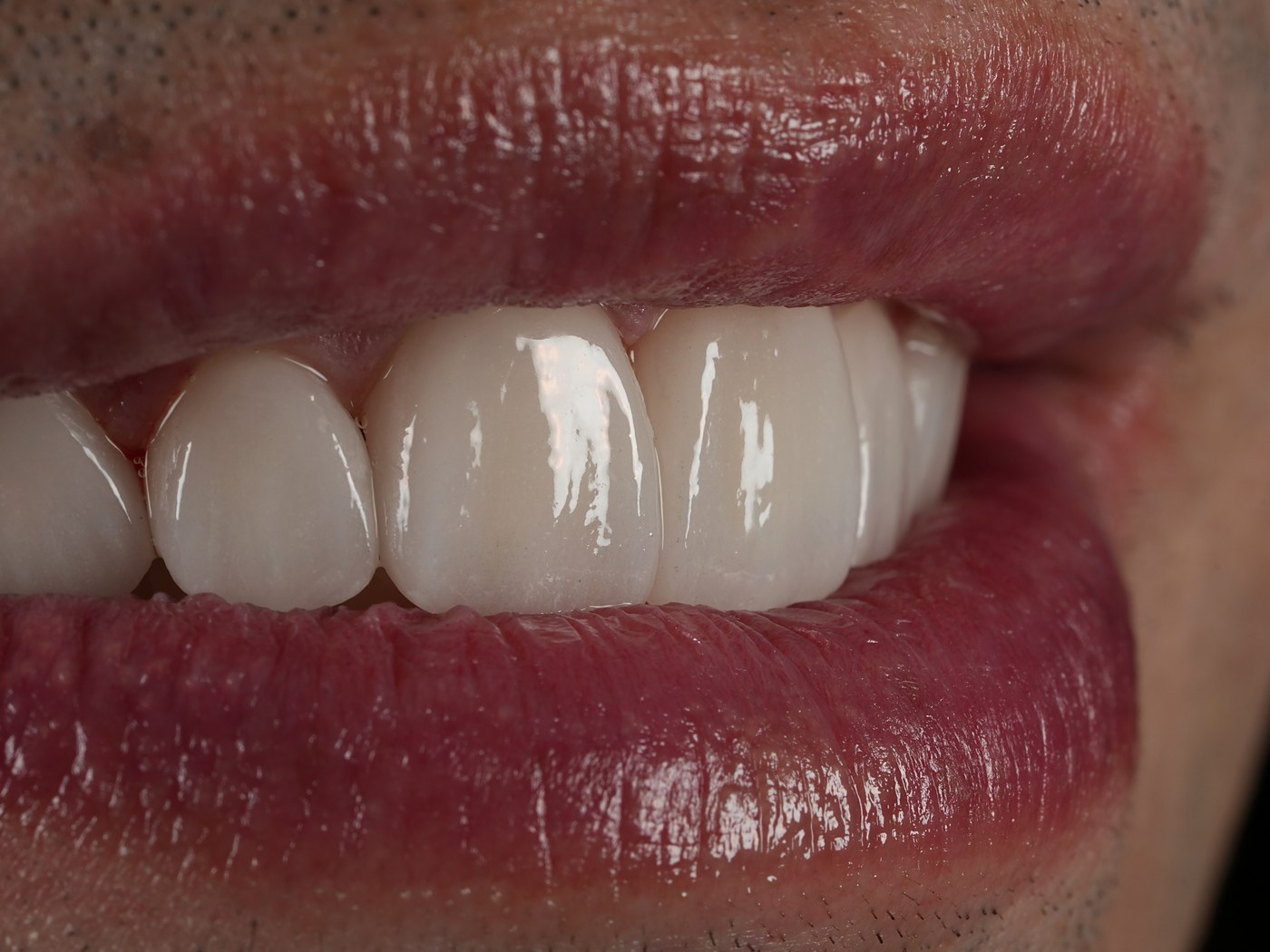
Finished all-ceramic zirconia crowns in the mouth, translucent at the edges like natural enamel
The same material fitted. No dark core underneath, so light carries through the edge the way it does through enamel
Materials, explained

All-ceramic. No metal underneath.

The older style of crown is porcelain baked over a metal shell. It works, but the metal is why those crowns eventually show a dark line at the gum and never quite look alive. Everything we make here is all-ceramic, and which of the two you get depends on where the tooth sits, how much it shows when you smile, and how hard you bite.

  • Zirconia — all-ceramic and the strongest of the two. The usual choice for molars, premolars and heavy or grinding bites.
  • IPS e.max — Ivoclar lithium disilicate, also all-ceramic. The most lifelike, chosen for front teeth and anywhere appearance leads.
  • Why no metal — light passes through ceramic the way it passes through enamel, and stops dead at metal. Metal-free also means no grey shadow at the gum line as the years pass, and no metal margin showing if the gum recedes.
  • Less tooth removed — a metal-backed crown needs room for both the metal and the porcelain over it. All-ceramic needs less thickness, so more of your own tooth stays.
  • Shade matched to the teeth beside it — a crown that is whiter than its neighbours is as obvious as one that is darker.
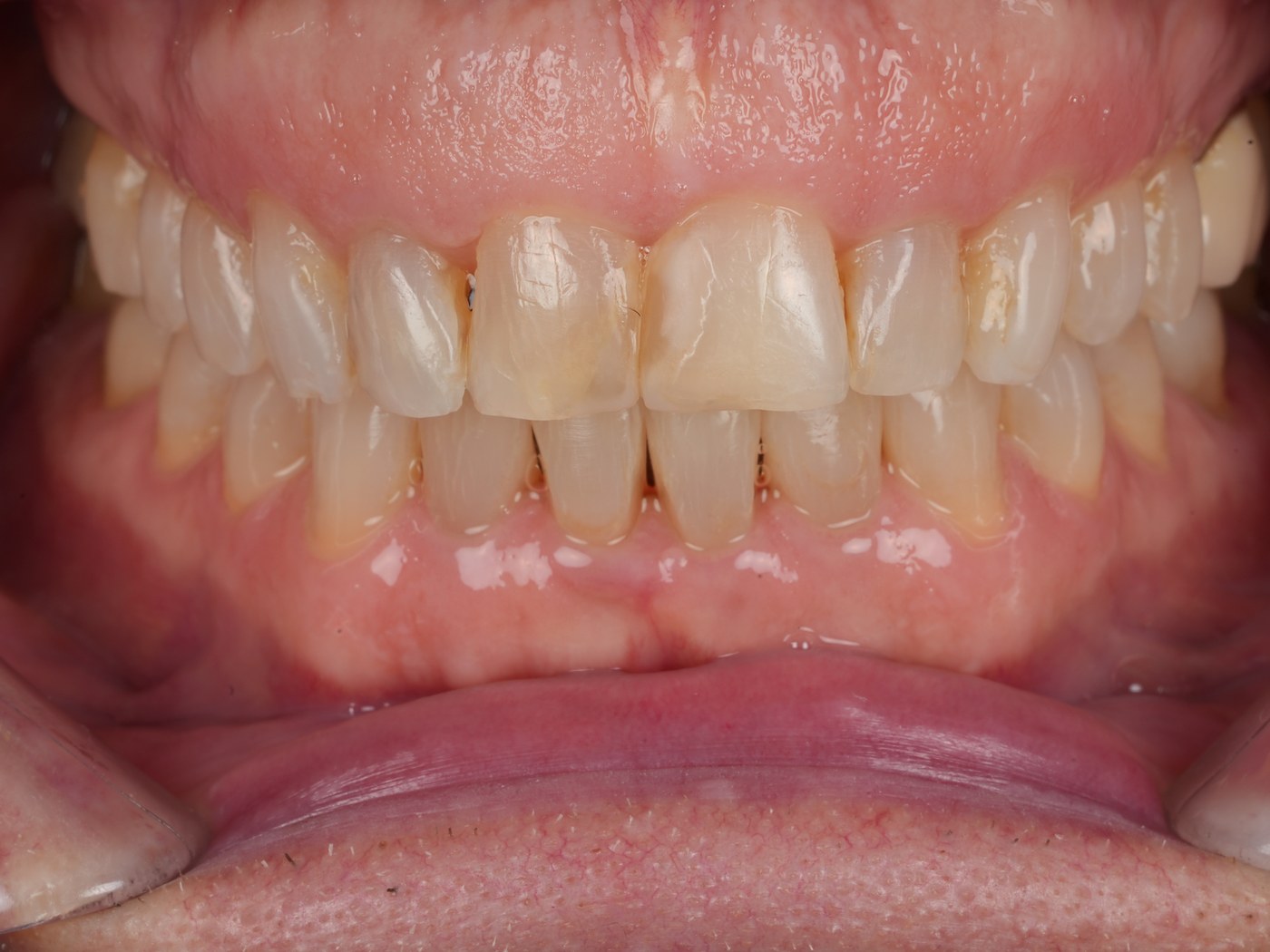
Before treatment — upper teeth with large old fillings, worn edges and stained margins
Before
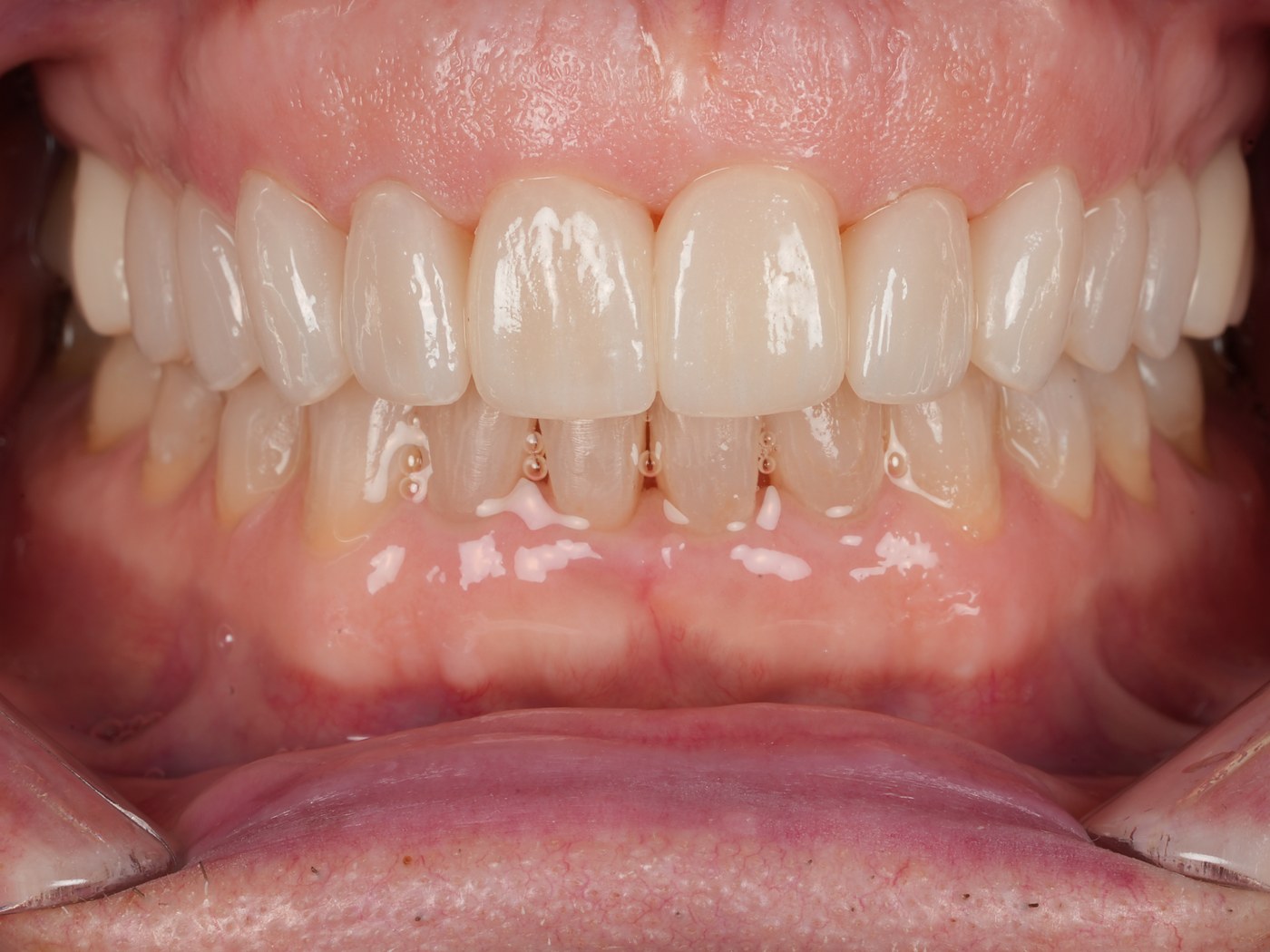
After treatment — the upper arch restored with all-ceramic crowns
After

Our own patient. Same retractors, same angle, same lighting, before and after. Individual results vary.

One case, start to finish

Large fillings that could not be kept clean, rebuilt as crowns.

The upper teeth had been filled and re-filled over the years. By this point the restorations were larger than what was left of the teeth, and the margins where filling met tooth had become impossible to keep properly clean, no matter how carefully he brushed.

Every upper tooth was rebuilt with an all-ceramic crown. The bite was restored first, and the appearance followed from it. The smooth ceramic margins are something a toothbrush can actually reach.

What the process looks like

Two visits, finished in 3–5 days.

This is the path for a straightforward case. If the tooth needs work before the crown, the plan changes and you are told what changes and why before it starts.

1

Examination and plan

X-ray, examination of the tooth and your bite, and a discussion of the material options. You leave with a written treatment plan and itemised costs, fixed before treatment begins.

First visit
2

Preparation, and a build-up if needed

Old filling material and any decay are removed. If too little sound tooth remains, it is built up first, with a post and core where the tooth has been root-treated. The tooth is then shaped under local anesthetic.

Same visit
3

Digital scan and temporary

The prepared tooth is scanned digitally rather than with a tray of impression material, and the case goes to the laboratory. You wear a temporary crown or bridge so you can eat and smile normally.

Same visit
4

Fit, bite check and cementation

Fit, contact with the neighbouring teeth, shade and bite are all checked before anything is cemented. A crown that sits high on the bite is worth catching in the chair, not a week later.

Second visit
5

Review

A short follow-up once you have been chewing on it normally. If anything feels off, come back. Adjusting it early is straightforward.

After you have used it

A straightforward crown is usually finished within 3 to 5 days from the day the tooth is prepared. Cases that need root canal treatment, a build-up or gum treatment first take longer, and you are told that at the first appointment rather than part-way through. If you are travelling soon, say so and the plan is arranged around your dates.

Looking after it

What actually decides how long it lasts.

A crown does not decay, but the tooth underneath it still can, and the gum around it still matters. How long the work lasts depends less on the material than on what happens around it.

The margin is the weak point

Decay starts where the crown meets the tooth at the gum. Brushing that line properly is what keeps a crown out of trouble.

Bridges need threading

You cannot floss between a bridge and the tooth next to it in the usual way. A floss threader or interdental brush goes underneath the false tooth once a day.

Grinding shortens everything

If you clench or grind at night, a night guard protects the ceramic. It is far cheaper than remaking the crown.

Regular check-ups

A cleaning appointment lets us look at the margins and the bite while a problem is still small enough to adjust.

Pricing

Quoted per tooth, in writing, before we start.

A bridge is priced per unit, so a three-unit bridge is three of the figures below: two crowns on the supporting teeth and the false tooth between them.

Crown or bridge ฿17,000 – 45,000

Per tooth, by material and case.

Inlay / onlay ฿15,000

Per tooth, where a full crown is not needed.

Implant with crown ฿39,000 – 79,000

Per tooth, if a bridge is not the right answer.

Root canal treatment, a build-up, or a post and core needed before the crown are quoted separately and shown as separate lines on your plan. Nothing is added once treatment has started. See the full price list →

★★★★★
"They reassured me that they would X-ray and scan the tooth, organise a replacement crown, and have everything completed within a week. … They not only managed to complete the replacement crown within my limited timeframe, but they also found the time to clean my teeth."

Anthony Johnson · September 2026 · read on Google

★★★★★
"I came here to have my tooth checked and was helped immediately. I got an appointment on the same day, and the very next day the necessary crown was already placed."

Joschi Gera · January 2026 · read on Google

Questions we get asked

Crowns and bridges, answered.

What is the difference between a crown and a bridge?

A crown covers one damaged tooth that is still in the mouth. A bridge replaces a tooth that is already missing, by joining crowns on the teeth either side of the gap with a false tooth in between. Both are made in a laboratory and cemented in place, and neither comes out at night.

My root canal was done at another clinic or in another country. Can you still make the crown?

Yes, this is common. We start by reviewing the root canal treatment itself. An X-ray shows how the canal was filled and whether the surrounding bone looks settled. If everything looks sound we plan the crown. If something looks unresolved we tell you before preparing the tooth. Bring any X-rays or records you have, or send them to us beforehand.

How long can I wait before getting the crown?

There is no single safe number of weeks, and waiting is not risk-free. A temporary filling is not designed to seal the tooth long term, and an unprotected root-treated tooth can crack, sometimes badly enough that it can no longer be saved. If you have been on a temporary filling for a while, it is worth having the tooth checked rather than guessing.

Do I need a crown, or would a filling be enough?

It depends on how much sound tooth is left. A filling replaces missing tooth structure but does not hold the remaining walls together. When a large part of the tooth has gone, or a cusp has fractured, or the tooth has had root canal treatment, a crown or an onlay is usually the more predictable choice. Where enough tooth remains, an inlay or onlay is the more conservative option and we will say so.

Bridge or implant for a missing tooth?

A bridge is quicker and does not involve surgery, but the teeth on either side of the gap have to be prepared to carry it. An implant does not touch the neighbouring teeth, but it needs enough bone and takes months rather than weeks. If the teeth beside the gap are already crowned or heavily filled, a bridge often makes more sense. If they are untouched, many people prefer not to cut them.

Which crown material will I get?

An all-ceramic one. Zirconia for strength on back teeth and heavy or grinding bites, IPS e.max lithium disilicate where appearance matters most. Both are metal-free, unlike the older porcelain-fused-to-metal crown that eventually shows a dark line at the gum. The material is chosen for your tooth and named on your treatment plan before anything begins.

How much do crowns and bridges cost in Chiang Mai?

Crowns and bridges are ฿17,000 to ฿45,000 per tooth depending on material and case. A bridge is priced per unit, so a three-unit bridge is three of those figures. Inlays and onlays are ฿15,000 per tooth. Any build-up, post and core or root canal treatment needed first is quoted separately, in writing, before treatment begins.

How many visits does it take?

Two: one to prepare the tooth and take the digital scan, and one to fit the finished crown or bridge. A straightforward crown is usually finished within 3 to 5 days, and you wear a temporary in between so you can eat and smile normally. Cases needing root canal treatment or a build-up first take longer, and you are told at the first appointment.

Send a photo or an X-ray and get a straight answer.

Tell us which tooth it is and what has been done to it before. You will get an honest view of whether it needs a crown, an onlay, or something else entirely.